
Compare Viwoods AiPaper and reMarkable across Android apps, AI-assisted reading, document handling, note-taking, and daily workflow to see which paper tablet fits you.
Searching for a reMarkable tablet usually means you want less screen noise and a better place to think. The real decision, however, is not simply which paper tablet looks more minimal. It is whether your work ends with handwriting, or continues into apps, research files, AI-assisted reading, document review, and organized follow-up.
This Viwoods vs reMarkable comparison focuses on four differences that change the daily experience: the operating system, how AI fits into reading and writing, how documents move through the device, and which workflow each product serves best. It compares the broader product ecosystems rather than forcing unlike models into a specification contest.
Quick Answer
Choose reMarkable when a controlled, distraction-minimized writing environment is the main goal. Choose Viwoods AiPaper when you also need Android apps, integrated AI tools, flexible file access, and a reading-to-action workflow that extends beyond the first handwritten page.
Viwoods vs reMarkable at a Glance
| What matters | Viwoods AiPaper series | reMarkable ecosystem |
|---|---|---|
| System and apps | Android 13, Google Play, and third-party reading, cloud, and productivity apps. | A purpose-built OS with no general on-device app store. |
| AI workflow | AI for explanation, summaries, translation, analysis, retrieval, and writing. | AI-assisted conversion, summaries, next steps, and handwriting search through Connect. |
| Reading and files | PDFs, e-books, cloud files, email, browsers, and reading apps. | PDF, EPUB, cloud sync, companion apps, and selected integrations. |
| Writing workflow | Handwriting and annotation can continue into apps, files, and AI-assisted follow-up. | A consistent handwriting-first workflow for notebooks, markup, and sketching. |
Model-specific screen size, color, lighting, storage, accessories, and pricing vary. This article concentrates on workflow differences that remain relevant across the product families.
01The biggest difference
Open Android and AI-Assisted Workflows
The operating system determines what happens after you capture an idea. Viwoods AiPaper runs Android 13 and can use Google Play after activation, so the same E Ink device can support apps such as Kindle, OneNote, Google Drive, Dropbox, email, browser tools, and other services that already belong to your workflow. You decide which apps to add instead of moving every task into a single proprietary environment.
That openness matters most when information arrives from several places. A researcher may receive a PDF by email, keep references in cloud storage, read a book in Kindle, annotate a document, and reuse the key points in a meeting or project note. On Viwoods, those activities can stay closer together because the device combines native writing tools with Android app access and several transfer methods.
Android access also comes with a practical trade-off: third-party apps are not all designed for E Ink, so layout, refresh behavior, and handwriting support can vary. The benefit is greater choice, not identical optimization in every app.
Apps that match the task Read, store, communicate, and review with familiar Android services.
AI inside the workflow Ask for explanation, summaries, translation, retrieval, and writing support.
Files move more freely Use local storage, cloud services, wireless transfer, email, or cable.

Workflow snapshot
Handwriting stays central without becoming a dead end
Capture the page naturally, then keep working with the apps, files, and AI tools that surround the note.
- Write first without opening a bright multipurpose screen
- Move from notes to research, storage, or follow-up
How AI fits into each workflow
On AiPaper, AI sits alongside the reading and writing tools rather than appearing only at the end of a note-taking session. Depending on the current software and selected model, it can help summarize a section, explain unfamiliar material, translate text, retrieve information, organize notes, or develop a draft.
reMarkable is not an “AI-free” product. Its Connect service offers AI-assisted conversion and sharing, note summaries, organized next steps, handwriting search, and meeting-related features. The difference is scope: these functions strengthen reMarkable’s focused notebook ecosystem, while Viwoods combines built-in AI assistance with an open Android environment and third-party apps.
Why this matters before buying: If your work starts and ends on a clean handwritten page, reMarkable’s controlled system can be an advantage. If the page is one stage in a larger research, reading, communication, or project workflow, Viwoods gives you more routes in and out.
02Reading sources and document depth
Reading PDFs, E-Books, and Research Documents
Both product families can support focused document reading, but the route to the document differs. reMarkable officially supports PDF and EPUB imports and is designed to bring files into a consistent, low-distraction environment. Its desktop and mobile apps, cloud sync, and selected integrations make that route clear and controlled.
Viwoods can be more practical when reading material does not come from one place. Native tools handle document reading and annotation, while Android access makes it possible to use reading apps, cloud drives, browsers, and other services. This is especially relevant for users who alternate between PDFs, e-books, web articles, class material, technical reports, and files shared by colleagues.
This is also a practical ecosystem difference for book readers: reMarkable supports imported EPUB files, but DRM-protected Kindle books cannot be opened directly. Buyers who rely on the native Kindle app will generally find the Android route on Viwoods more convenient.

Reading snapshot
Better when documents come from more than one place
Keep long-form reading comfortable while leaving room for cloud files, reading apps, annotations, and later review.
- Useful for PDFs, e-books, reports, and shared files
- Designed for reading that leads to notes and action
Choose based on the documents you actually use
- Mostly imported PDFs and EPUBs: reMarkable offers a deliberately consistent reading and markup path.
- Kindle, cloud drives, web tools, and mixed sources: Viwoods’ Android environment reduces the need to rebuild your reading routine.
- Dense academic or technical PDFs: prioritize screen space and annotation workflow rather than the longest feature list.
- Important work files: test representative documents because fixed layouts, columns, scans, and charts behave differently.
03What happens after highlighting
Taking Notes While You Read
A highlight is useful only when you can find and reuse it. reMarkable’s strength is continuity: open a document, write in a familiar interface, organize the file, and continue later across the reMarkable apps. For readers who want one calm place for notes and documents, that consistency is valuable.
Viwoods is designed for a broader loop. You can annotate documents and pages, capture material from third-party apps, add handwritten thoughts, use AI to clarify or summarize content, then move useful ideas into notes, tags, project files, or follow-up tasks. The value is not simply “more tools”; it is reducing the gap between reading something and doing something with it.
01ReadOpen the source where it already lives.
02MarkCapture the exact passage, page, or context.
03UnderstandSummarize, explain, or add your own note.
04ReuseMove the insight into study, writing, or action.
A practical test: Think about the last five documents you read. Where did they come from, where did your notes go, and what did you do with them afterward? The device that removes the most steps from that real sequence is usually the better purchase.
04The decision point
Which Device Fits the Way You Work?
Neither approach is automatically better. A controlled system can protect focus; an open system can prevent workflow friction. The better choice depends on which compromise you notice every day.
You want a focused writing space first
- Your main tasks are handwriting, meeting notes, sketching, or reviewing imported documents.
- You prefer one consistent interface with fewer distractions and fewer app choices.
- You are comfortable managing files through reMarkable’s apps, cloud, and integrations.
- You value a controlled paper-like writing workflow more than app flexibility.
Your notes belong to a larger workflow
- You regularly use PDFs, e-books, Kindle, cloud drives, browser content, or files from several sources.
- You want AI assistance for explanation, summarizing, translation, retrieval, or writing.
- You need third-party Android apps and flexible local, cloud, email, wireless, or cable transfer.
- You must reuse what you read and write in study, research, projects, or professional work.
Three questions that usually settle the decision
- Do you want the tablet to simplify your workflow by limiting options, or to fit into an existing set of apps and services?
- Will AI mainly convert and organize notes, or should it also help you understand and work with reading material?
- Are your documents imported into one library, or do they continue to arrive from apps, cloud folders, email, and the web?
Choose the Viwoods Size That Fits Your Day
AiPaper and AiPaper Mini share the Viwoods software foundation and core Android, reading, writing, app, and AI workflows. The practical difference is physical: AiPaper gives complex pages more room, while AiPaper Mini is easier to carry and adds an adjustable front light.


More working space
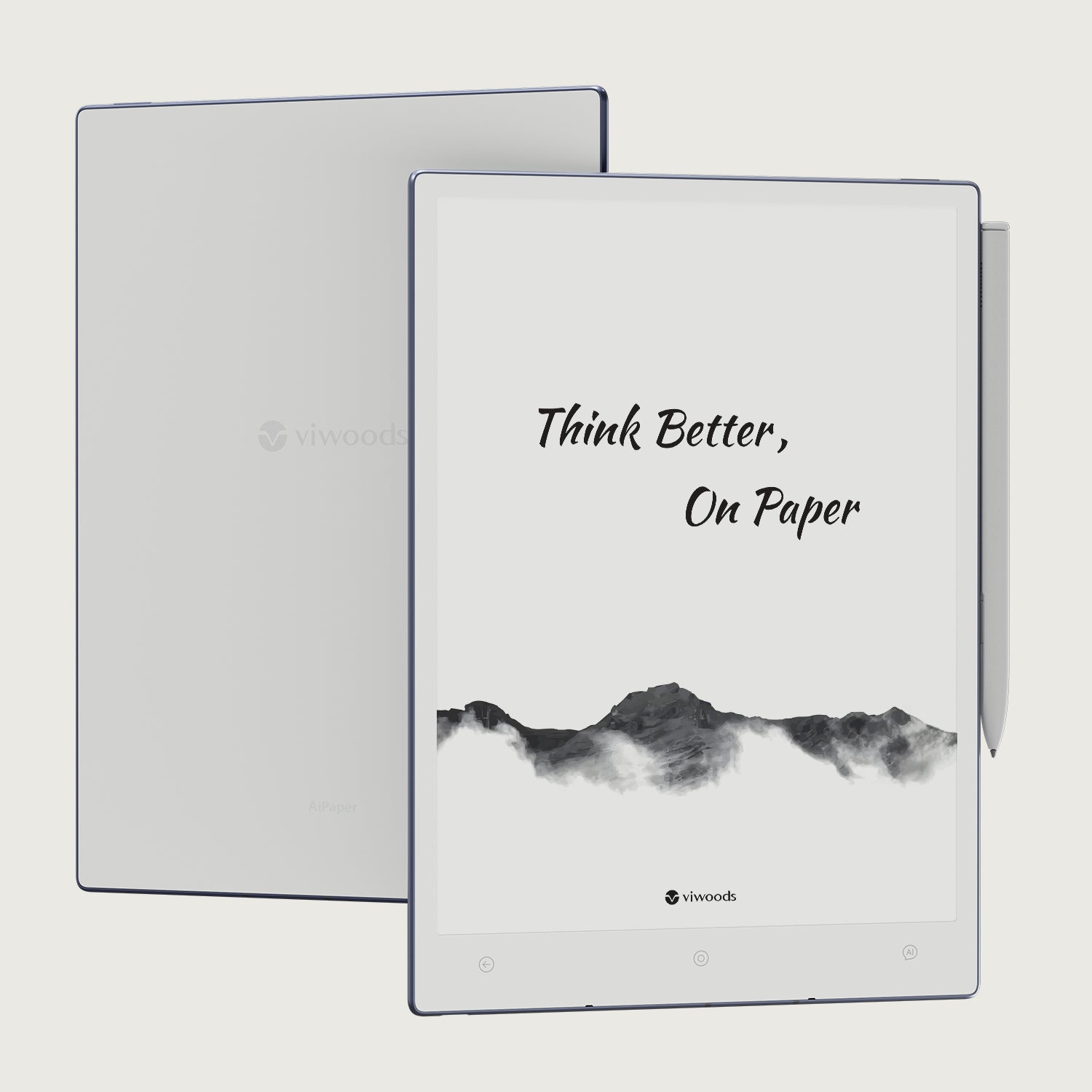
Viwoods AiPaper 10.65"
Choose the larger AiPaper when full-page PDFs, long writing sessions, diagrams, research files, and desk-based study or professional work make screen space more important.
- More room for dense PDFs and margin notes
- Better fit for research, review, and long-form writing
- Thin, lightweight design for a larger paper tablet
- No front light; best in natural or room lighting


Portable and front-lit
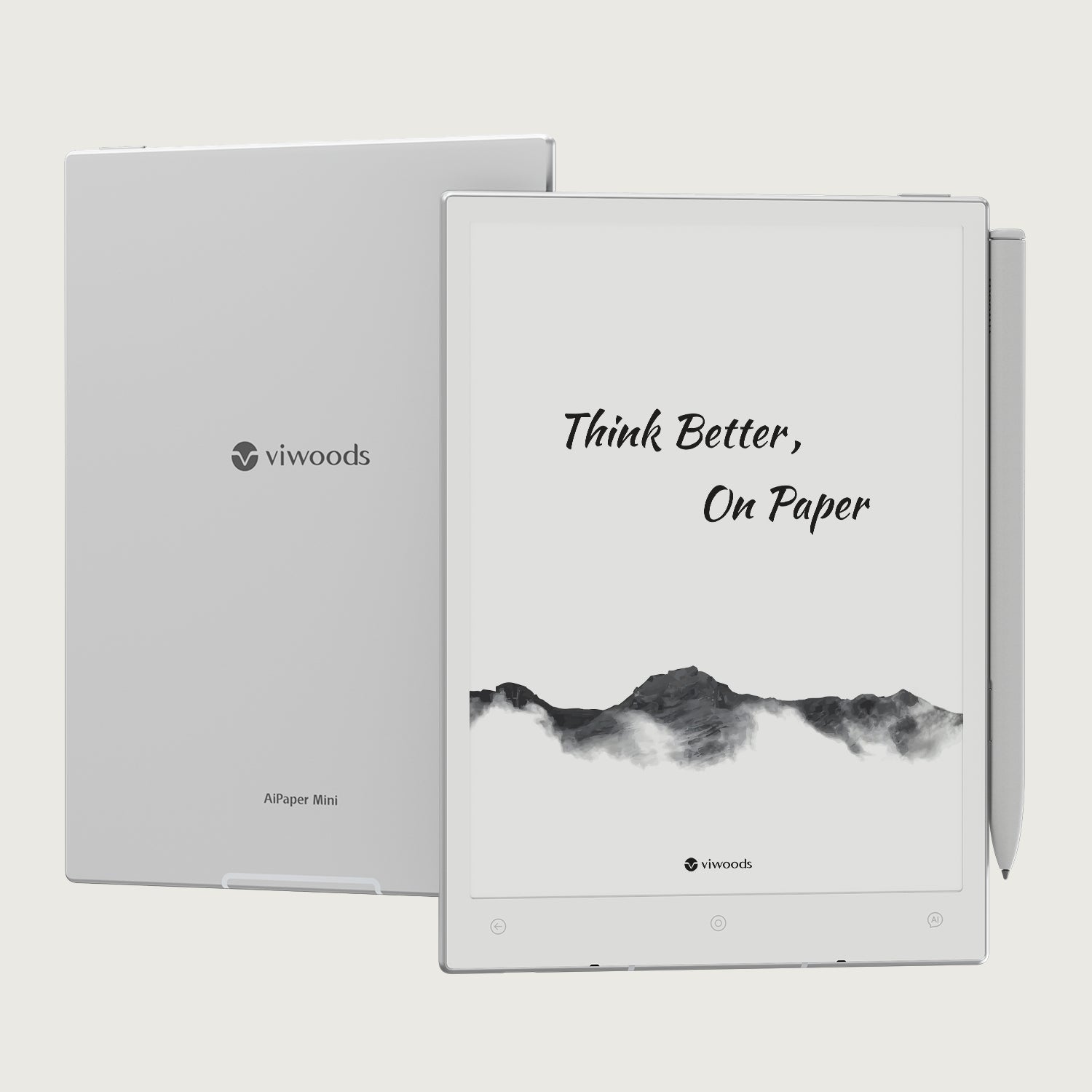
Viwoods AiPaper Mini 8.2"
Choose AiPaper Mini when quick notes, daily reading, travel, commuting, and one-handed portability matter more than viewing a full document page at a larger scale.
- Compact size for everyday carry
- Adjustable front light for changing environments
- Suitable for reading, quick notes, and daily planning
- Same core Android, writing, app, and AI workflow in a smaller format
Frequently Asked Questions
Is Viwoods a good alternative to reMarkable?
Yes, especially for buyers who like the idea of an E Ink writing tablet but need more than a closed notebook environment. Viwoods AiPaper adds Android apps, integrated AI tools, flexible file transfer, and broader reading sources. reMarkable remains a strong choice for people who want a refined, consistent, distraction-minimized writing workflow.
Does reMarkable have AI features?
Yes. reMarkable Connect includes AI-assisted handwriting conversion and sharing, summaries, organized next steps, handwriting search, and related workflow tools. The difference is that reMarkable uses AI mainly within its own ecosystem, while Viwoods integrates AI assistance with a wider Android app and document environment.
Can I install Kindle, OneNote, or cloud apps on Viwoods AiPaper?
Viwoods AiPaper and AiPaper Mini run Android 13 and support Google Play activation. App compatibility and E Ink performance can vary by app, so important services should be tested for the exact reading, login, handwriting, or synchronization workflow you need.
Which is better for PDFs: Viwoods or reMarkable?
Both can work well for PDFs. reMarkable offers a consistent imported-document workflow. Viwoods is more flexible when PDFs come from cloud drives, email, apps, browsers, or mixed sources, and when annotation needs to connect with AI tools and later work. Dense academic and technical files usually benefit from the larger AiPaper screen.
Which device is better for students and researchers?
Viwoods may be the stronger fit when study or research involves Kindle, cloud storage, several document sources, PDF annotation, AI-assisted explanation, and reusing notes in assignments or projects. reMarkable may be better for a student who deliberately wants fewer tools and mainly needs focused handwriting and imported reading material.
Should I buy AiPaper or AiPaper Mini?
Choose the 10.65-inch AiPaper for larger PDFs, extended handwriting, research, desk work, and more page space. Choose the 8.2-inch AiPaper Mini for portability, daily reading, quick notes, commuting, travel, and an adjustable front light. Their core software direction is similar; screen size and display hardware shape the experience.
Is reMarkable still better for pure handwriting?
reMarkable may still be the better fit for pure handwriting when a highly controlled interface and a consistent paper-like workflow matter more than app flexibility. Writing feel is subjective, so compare the pen, surface, page-turning, organization tools, and return policy rather than relying on one latency or texture claim.
More than a blank page
Choose the workflow you will actually use.
Go larger for PDFs and deep work, or choose the compact Mini for reading and notes wherever the day takes you.
Comparison note: product features and services can change through software updates, model releases, subscriptions, and regional availability. Confirm current details on the relevant product page before purchase.
Guides 紙のような書き心地のタブレット
E Ink Tablet for Training and Onboarding: Manuals, Notes and Knowledge Capture
E Ink Tablet for Executive Briefings: Read, Mark, Decide and Follow Up
How to Evaluate an E Ink Tablet Demo for a Business Team
E Ink Tablet Total Cost of Ownership for Business Teams
E Ink Tablet for Research Interviews: Interview Guides, Field Notes and Follow-Up
How to Choose a Protective Case for an E Ink Paper Tablet
How to Store an EMR Stylus Safely: Protect the Nib, Magnet and Tablet
How to Clean an E Ink Tablet Screen Safely: A Practical Care Guide
Viwoods AiPaper
$549.00
Viwoods AiPaper Mini
$429.00
Viwoods AiPaper Reader カラー
$289.00
Viwoods AiPaper Reader
$279.00