
A productive meeting should leave your team with more than a page of notes. It should clarify what was decided, who is responsible for each task, and what needs to happen next.
Yet turning meeting discussions into actionable work is not always straightforward. Important commitments can get buried in long transcripts, deadlines may remain unclear, and follow-up tasks can become scattered across emails, documents, and project management tools.
AI can help bridge this gap. By combining meeting transcription, AI summarization, and structured task extraction, you can turn raw meeting notes into a practical action plan without manually rewriting every detail.
With its AI-assisted note-taking features, handwriting capabilities, and open Android ecosystem, Viwoods AiPaper offers a paper-like digital workspace for capturing discussions and organizing follow-up work.
So, we will walk through a practical process for turning meeting notes into action items with AI, using examples from everyday project meetings and team collaboration.
Why Meeting Notes Often Fail to Become Action Items

Most meeting notes are designed to preserve information. Action items serve a different purpose: they tell people what to do with that information.
Consider a typical project meeting. The team discusses a website launch, agrees that a product page needs revision, and identifies a dependency on the legal team. The discussion may be clear to everyone in the room, but the notes might not specify who owns the legal follow-up or when approval is expected.
Three problems frequently get in the way.
1. Important decisions get buried. Meeting notes often mix background information, brainstorming, decisions, and outstanding questions. Finding the actual commitments later takes time.
2. Ownership and deadlines are unclear. A statement such as "We need to update the proposal" describes a requirement, not a complete action item. Someone still needs to confirm the owner and deadline.
3. Follow-up information becomes fragmented. Notes may live in one application, deadlines in a calendar, and project discussions in email or team chat. Without a consistent process, important tasks are easy to overlook.
These challenges are part of a broader workplace productivity problem. Microsoft's 2023 Work Trend Index found that 68% of surveyed workers said they lacked sufficient uninterrupted focus time during the workday, while 62% struggled with spending too much time searching for information.
These figures are from Microsoft's 2023 research, not a current-year survey. They nevertheless illustrate why organizing information and reducing repetitive administrative work remain important goals.
The solution is not simply to take more detailed notes. It is to create a repeatable process that turns meeting information into clear, verifiable next steps.
How to Turn Meeting Notes into Action Items with AI

Step 1: Capture the Meeting Without Losing Important Details
Start by recording the information that matters for future work.
During a meeting, pay particular attention to:
Decisions that have been confirmed.
Tasks that participants explicitly agree to complete.
Names of people who accept responsibility.
Deadlines and dependencies.
Questions that remain unresolved.
Handwritten notes are useful for capturing quick observations, drawing diagrams, and highlighting important points. Audio recording and transcription can supplement those notes when the meeting is too fast-paced to document every detail manually.
Viwoods AiPaper combines handwritten note-taking with voice recording and AI-assisted meeting workflows. According to Viwoods' official AiPaper update, the device supports recordings of up to 60 minutes per recording, alongside transcription and AI text-processing features.
For example, during a weekly marketing meeting, you might handwrite the campaign's main decisions while recording the discussion, provided everyone has given any required consent and your organization's policies permit recording.
The goal is to preserve the context needed to understand the team's commitments after the meeting ends.
Step 2: Use AI to Summarize the Discussion

A transcript can contain useful information, but reading it from beginning to end is rarely the fastest way to find decisions.
Ask AI to organize the discussion into a few distinct categories:
Key discussion points.
Confirmed decisions.
Proposed or agreed actions.
Outstanding questions.
Risks and dependencies.
This structure makes the meeting easier to review and provides a clearer starting point for extracting tasks.
Viwoods AiPaper supports AI-assisted polishing and summarization of meeting-related text. Its workflow can help turn recorded discussions and notes into more organized material for review.
However, a summary is not necessarily an action plan. A statement such as "The team discussed improving customer onboarding" may accurately describe the conversation without identifying a specific task, owner, or deadline.
That is why the next step matters.
Step 3: Extract Specific Action Items with AI
Once you have a usable summary or transcript, ask AI to identify the tasks that require follow-up.
A useful prompt is:
Review these meeting notes and extract all explicitly agreed action items. For each item, identify the task, confirmed owner, deadline, dependency, and supporting statement from the notes. If the owner or deadline was not specified, mark it as "Not specified." Do not invent commitments or treat suggestions as confirmed decisions.
This instruction encourages AI to distinguish explicit commitments from assumptions.
For example, compare these two statements:
Vague note: "We need to improve the landing page."
Actionable task: "Revise the landing-page comparison section. Owner: not specified. Deadline: not specified."
The second version is more useful because it exposes the missing information instead of concealing it.
For a task to be genuinely actionable, it should ideally contain five elements:
1. Task: What needs to be done?
2. Owner: Who has agreed to do it?
3. Deadline: When is it due?
4. Dependency: What must happen first?
5. Status: Is it confirmed, pending, blocked, or completed?
Not every task will have all five elements immediately. AI should identify the gaps so the team can resolve them.
With AiPaper, users can work with recorded meeting content, AI-polished text, and handwritten notes as part of their note-taking workflow. The generated output should still be checked against the original discussion before it becomes an official commitment.
Step 4: Verify Owners, Deadlines, and Decisions

AI can organize information, but it cannot reliably determine every commitment that participants intended to make.
Suppose a meeting transcript includes the sentence, "Sarah, could you look at the revised proposal?" That does not necessarily mean Sarah agreed to deliver a completed proposal by Friday.
Before distributing an action list, check three things:
Did the named person explicitly accept responsibility?
Was the deadline actually agreed upon?
Is the task a confirmed decision, a suggestion, or an unresolved question?
If any answer is unclear, mark the item for confirmation.
This step is especially important in client meetings, financial discussions, legal reviews, and projects involving several departments. A plausible AI-generated task can still be wrong if it misinterprets the conversation.
Step 5: Organize the Action Items for Daily Work
After verifying the tasks, arrange them into a format the team can use.
For individual work, group tasks by priority or deadline. For project teams, organize them by owner, project phase, or dependency. Keep unresolved questions separate from confirmed assignments.
Viwoods AiPaper includes a Daily workspace for organizing tasks and calendar-related work. Its official product information also describes Google and Outlook calendar synchronization, helping users connect planning with their existing schedules.
Explore the Viwoods AiPaper product page for more information about its note-taking and productivity features.
Remember that organizing a task on a digital paper device is different from automatically creating an assignment in an external project management platform. Any required integration or synchronization should be verified for the specific application and workflow.
Step 6: Follow Up Before the Next Meeting
An action list only creates value when people use it.
Before the next meeting, review the previous list and identify:
Tasks completed since the last discussion.
Tasks that remain in progress.
Items blocked by another person or decision.
Deadlines that need to be renegotiated.
New decisions that require follow-up.
You can ask AI to turn these updates into a concise progress report or meeting agenda. This makes it easier to begin the next meeting with outstanding work rather than reconstructing the previous discussion from scratch.
Over time, the process creates a useful record of decisions and commitments across recurring meetings.
A Real-World Example: Turning a Project Meeting into an Action Plan
Imagine a marketing team preparing to launch a new product page. During the meeting, the team records the following notes:
The product comparison section needs revision.
Sarah agrees to revise the comparison section by Thursday.
The product manager needs to confirm the latest specifications, but no deadline is agreed upon.
The campaign cannot launch until legal approval is received.
The team will review progress at the next Monday meeting.
An AI tool can organize these notes into a structured action list.
| Action item | Owner | Deadline or status |
|---|---|---|
| Revise the product comparison section | Sarah | Thursday |
| Confirm the latest product specifications | Product manager | Not specified |
| Obtain legal approval | Not specified | Pending; blocks launch |
| Review progress | Project team | Next Monday |
This is an illustrative example, not a measured test of Viwoods AiPaper's output.
Notice what the table does not do: it does not invent a deadline for the product manager, assign legal approval to an arbitrary team member, or claim that a pending task has been completed.
Those distinctions make the output more useful than a generic meeting summary.
A team using Viwoods AiPaper could capture the discussion, use its supported transcription and AI-processing workflow to organize the meeting content, and review the resulting action list before transferring confirmed tasks into its established work system.
The benefit is a more consistent path from discussion to follow-up, with fewer details left buried in raw notes.
Why Use Viwoods AiPaper for AI-Assisted Meeting Notes?

Turning meeting notes into action items requires more than a summarization feature. It also requires a convenient way to capture information, review documents, write naturally, and organize work afterward.
Viwoods AiPaper brings several of these activities into a single digital paper workspace.
1. AI Features That Support the Work After a Meeting
AiPaper's meeting workflow includes voice recording, transcription, AI-assisted polishing, and summary generation. Its software updates also document improvements to AI commands and options for exporting transcribed or processed text.
These capabilities are relevant when you need to turn a long discussion into material that can be reviewed, edited, and shared.
Instead of treating the meeting transcript as the final result, use it as the source for a verified decision log, follow-up email, or task checklist.
See the official AiPaper software update notes for documented meeting and AI workflow features.
2. An Open Android Ecosystem for Flexible Workflows
Different professionals use different tools to manage projects, documents, and communication. A digital note-taking device is more useful when it can fit into an existing work environment.
Viwoods AiPaper runs Android 13, and its product specifications list Google Play Store availability. This gives users flexibility to explore compatible Android applications rather than relying exclusively on a single-purpose note-taking environment.
For example, a consultant may prefer one application for reading client documents, another for managing tasks, and a calendar for scheduling follow-ups. An Android-based workflow can make these choices more flexible, subject to each application's compatibility and performance.
Open Android does not mean that every application, integration, or background synchronization feature is guaranteed to work. Check compatibility before making a specific app part of a critical business process.
For hardware details, visit the Viwoods AiPaper specifications and comparison page.
3. A Refined, Paper-Like Design for Professional Meetings
Some people think more clearly when they write by hand. Others need to annotate a proposal while listening to a client or sketch a workflow during a planning session.
AiPaper is designed around a paper-like E Ink writing experience rather than the conventional glass-screen tablet experience.
Its published specifications list a 10.65-inch display, a 2660 × 1920 resolution at 300 pixels per inch, and a slim 4.5 mm profile. The product page lists a weight of approximately 370 g.
These physical characteristics make it a portable option for professionals who regularly move between meeting rooms, offices, and client locations.
The appeal is not that a refined device automatically makes meetings more productive. It is that handwriting, reading, and reviewing documents can happen in a dedicated workspace designed around digital paper.
4. Responsive Writing Without Losing the Digital Workflow

A note-taking device needs to respond naturally when you write, annotate, or navigate between documents.
Viwoods emphasizes low-latency handwriting and a responsive writing experience on AiPaper. As with any E Ink device, refresh behavior varies by activity: writing, scrolling, and viewing dynamic applications do not necessarily behave like a high-refresh-rate LCD tablet.
For meeting notes, the practical consideration is whether handwriting and annotation feel comfortable enough for the way you work.
AiPaper also combines handwriting with digital text processing. Its AI-enhanced handwriting conversion supports turning handwritten content into text, making it easier to reuse notes instead of retyping everything manually.
Always review converted text for errors, especially when it contains names, technical terms, figures, or deadlines.
5. A Connected Workspace for Notes and Daily Tasks
Meeting notes often become less useful when they remain disconnected from the calendar and the rest of the workday.
AiPaper's Daily workspace supports task organization, and its documented calendar features include Google and Outlook synchronization. These capabilities can help users keep notes and planning closer together.
A practical workflow might look like this:
1. Capture meeting notes and record the discussion where permitted.
2. Generate a summary and extract candidate action items.
3. Confirm the owners and deadlines with the team.
4. Organize personal follow-ups and relevant calendar entries.
5. Transfer shared assignments into the team's designated project management tool when needed.
The device supports the note-taking and organization stages of this process. The exact level of automation depends on the applications and integrations involved.
AI Prompts You Can Reuse After Any Meeting
You do not need a complicated prompt to get started. Clear instructions about the output and the limits of the available information are often more useful than asking AI to "summarize everything."
Prompt 1: Extract Action Items
"Review the following meeting notes. Extract all explicitly agreed action items and list the task, confirmed owner, deadline, dependency, and supporting statement. Separate confirmed commitments from suggestions. Mark missing information as 'Not specified.' Do not invent names, dates, or assignments."
Prompt 2: Draft a Meeting Follow-Up Email
"Draft a concise follow-up email based on these notes. Summarize the key decisions, confirmed action items, owners, deadlines, and unresolved questions. Clearly identify anything that requires confirmation. Do not add commitments that were not agreed upon."
Prompt 3: Prepare for the Next Meeting
"Turn the latest meeting notes and progress updates into a follow-up checklist. Group items into completed, in progress, blocked, and awaiting a decision. Include the next required step for each outstanding task. Only mark an item completed when the source information confirms it."
These prompts can be adapted to AI tools that support text instructions and to compatible AI workflows on Viwoods AiPaper. Review the available input methods and features on your device before assuming that every prompt can be executed in every context.
Common Mistakes to Avoid When Using AI for Meeting Notes

AI can make meeting documentation more manageable, but several mistakes can undermine the results.
Treating a summary as a complete task list. A summary may capture the main ideas without identifying every responsibility or deadline.
Trusting transcription without checking it. Background noise, overlapping speakers, accents, and technical terminology can affect transcription quality.
Allowing AI to fill in missing details. If nobody agreed on a deadline, the correct output is "Not specified," not an invented date.
Ignoring confidentiality and consent. Before recording a meeting, follow company policy, applicable recording-consent requirements, and relevant privacy rules. Check how audio, transcripts, and AI-processed content are stored and handled.
Assuming that all apps and integrations work automatically. Android compatibility, calendar synchronization, file export, and third-party task creation are separate capabilities. Verify the specific workflow you need.
The objective is not to remove human judgment from meeting management. It is to spend less time formatting and searching for information, leaving more attention for decisions and execution.
Frequently Asked Questions
Can AI automatically turn meeting notes into action items?
AI can extract proposed tasks from meeting notes or transcripts and organize them by owner, deadline, and status. However, it may misinterpret context or infer commitments that were never made. Review the output before assigning work.
Can AI generate action items from handwritten meeting notes?
Yes, if the tool supports handwriting recognition or conversion to digital text. Viwoods AiPaper supports AI-enhanced handwriting-to-text conversion and AI processing of supported note content. Recognition quality should be checked before the results are shared.
Can Viwoods AiPaper record and summarize meetings?
Viwoods documents voice recording, transcription, and AI-assisted text processing for its meeting workflow. Its published software update notes specify a maximum recording duration of 60 minutes per recording. Available functionality may depend on the installed software version and AI service conditions.
Can I use Android apps on Viwoods AiPaper?
AiPaper runs Android 13, and its published specifications list Google Play Store availability. Individual applications may have different compatibility, interface, or performance characteristics on an E Ink device.
Can AI meeting notes sync with my task manager?
That depends on the specific application and integration. AiPaper supports task organization and documented Google and Outlook calendar synchronization, but these capabilities should not be confused with automatic assignment creation in every external project management platform.
Is an E Ink tablet useful for professional meetings?
An E Ink tablet can be useful for professionals who prefer handwriting, reading, and document annotation in a focused digital workspace. It is not a direct replacement for every function of a conventional tablet, particularly when color-rich content, fast animation, or intensive multimedia work is required.
Turn Your Next Meeting into a Clear Action Plan
Better meeting notes are not necessarily longer notes. They are notes that make the next step clear.
By combining careful information capture with AI summarization, action-item extraction, and human verification, you can create a more consistent process for turning discussions into work.
Viwoods AiPaper brings together paper-like handwriting, AI-assisted meeting workflows, digital text conversion, and an open Android environment to support that process.
Explore Viwoods AiPaper to see how digital paper can fit into your meeting and productivity workflow.
Guides أقراص ورقية
Paper Tablet for Meetings: Notes to Action Items
E Ink Tablet for Training and Onboarding: Manuals, Notes and Knowledge Capture
E Ink Tablet for Project Handoffs: Review Notes, Open Issues and Next Steps
E Ink Tablet for Field Teams: Offline Notes, Forms and Daily Review
How to Evaluate an E Ink Tablet Demo for a Business Team
E Ink Tablet Total Cost of Ownership for Business Teams
E Ink Tablet for Compliance Audits: Checklists, Evidence Notes and Follow-Up
Fabric vs Leather Tablet Case: Which Material Fits Daily Carry?
E Ink Tablet for Research Interviews: Interview Guides, Field Notes and Follow-Up
How to Choose a Protective Case for an E Ink Paper Tablet
Paper Tablet Accessories Checklist: What You Need for Daily Carry
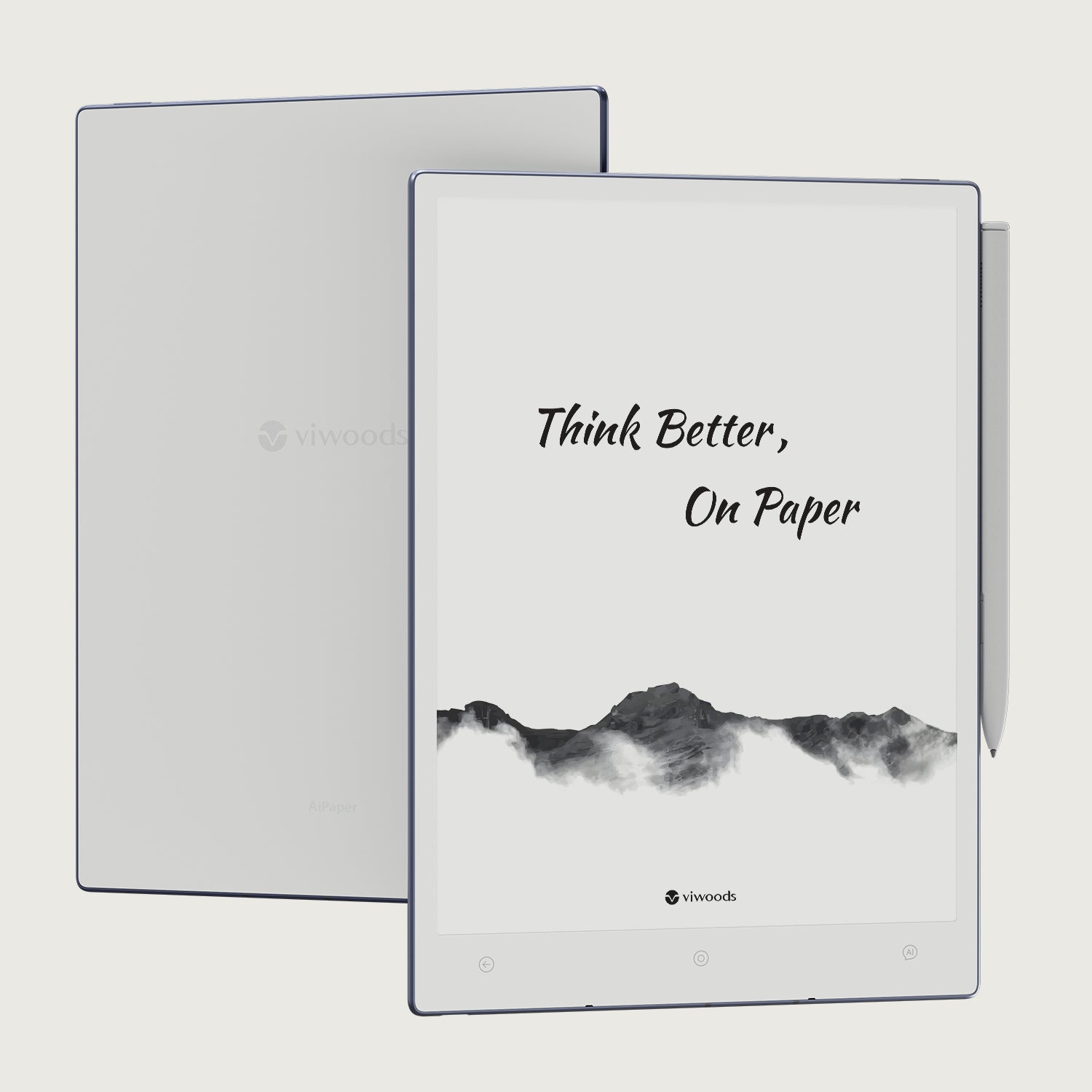
Viwoods AiPaper
$549.00
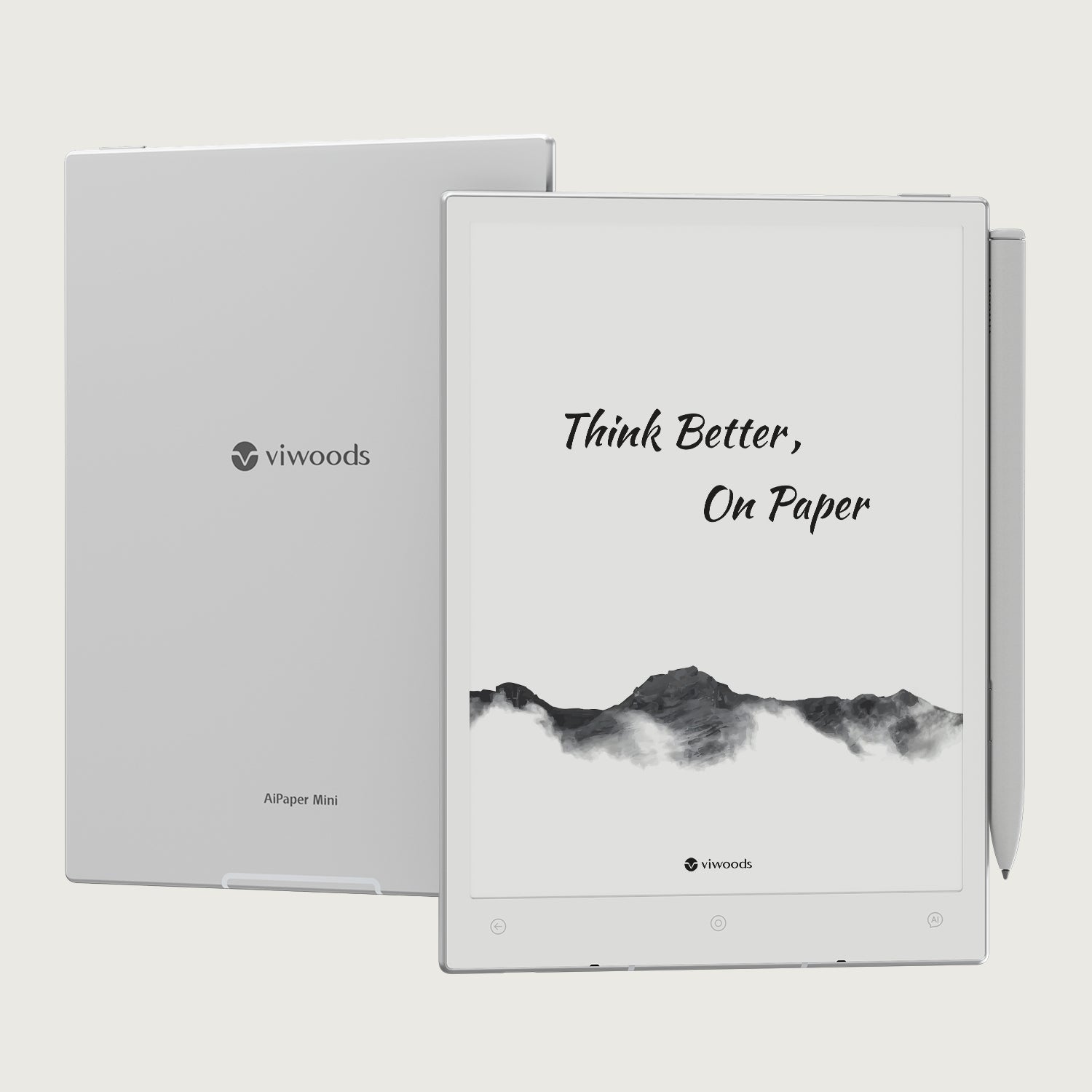
Viwoods AiPaper Mini
$429.00
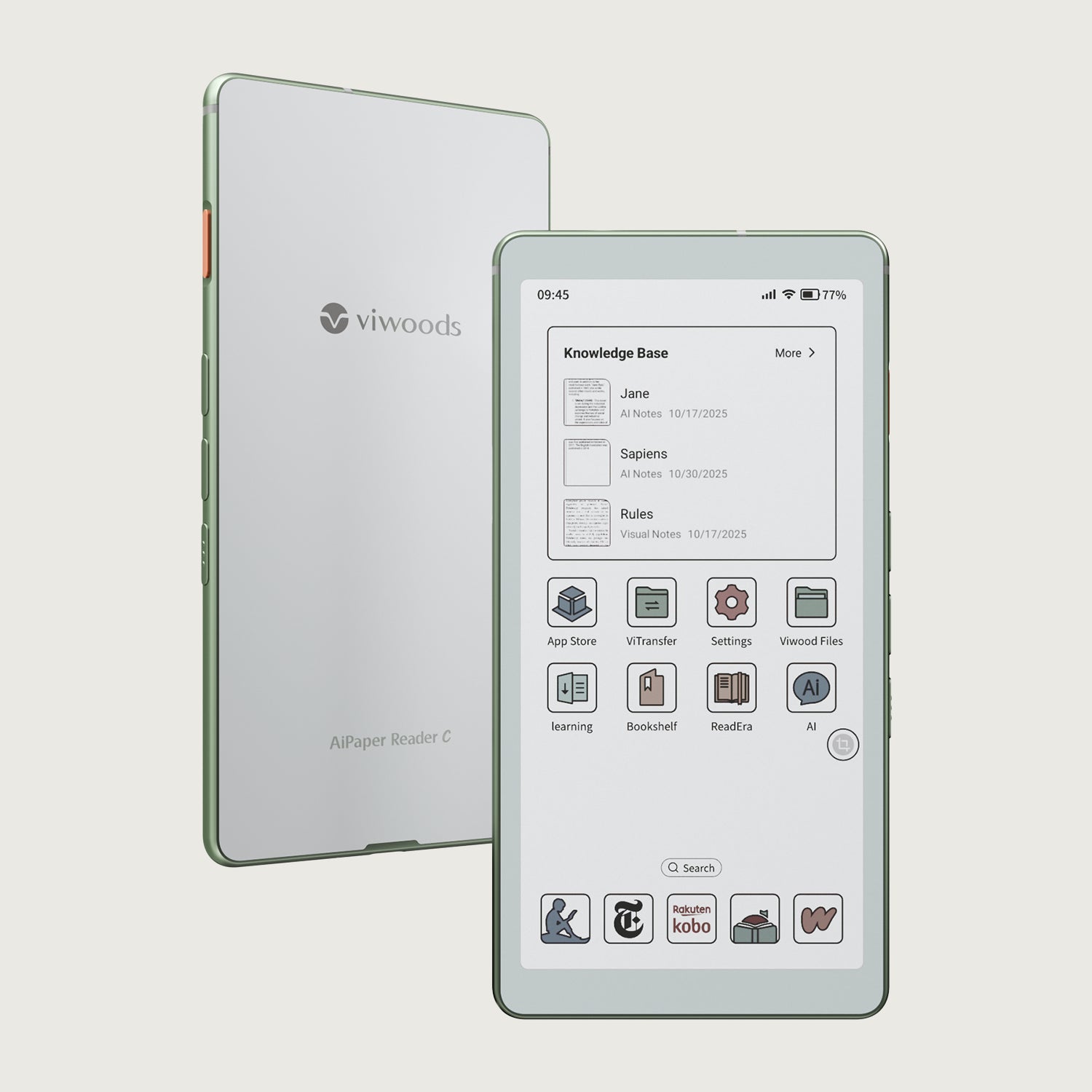
قارئ Viwoods AiPaper الملون
$289.00
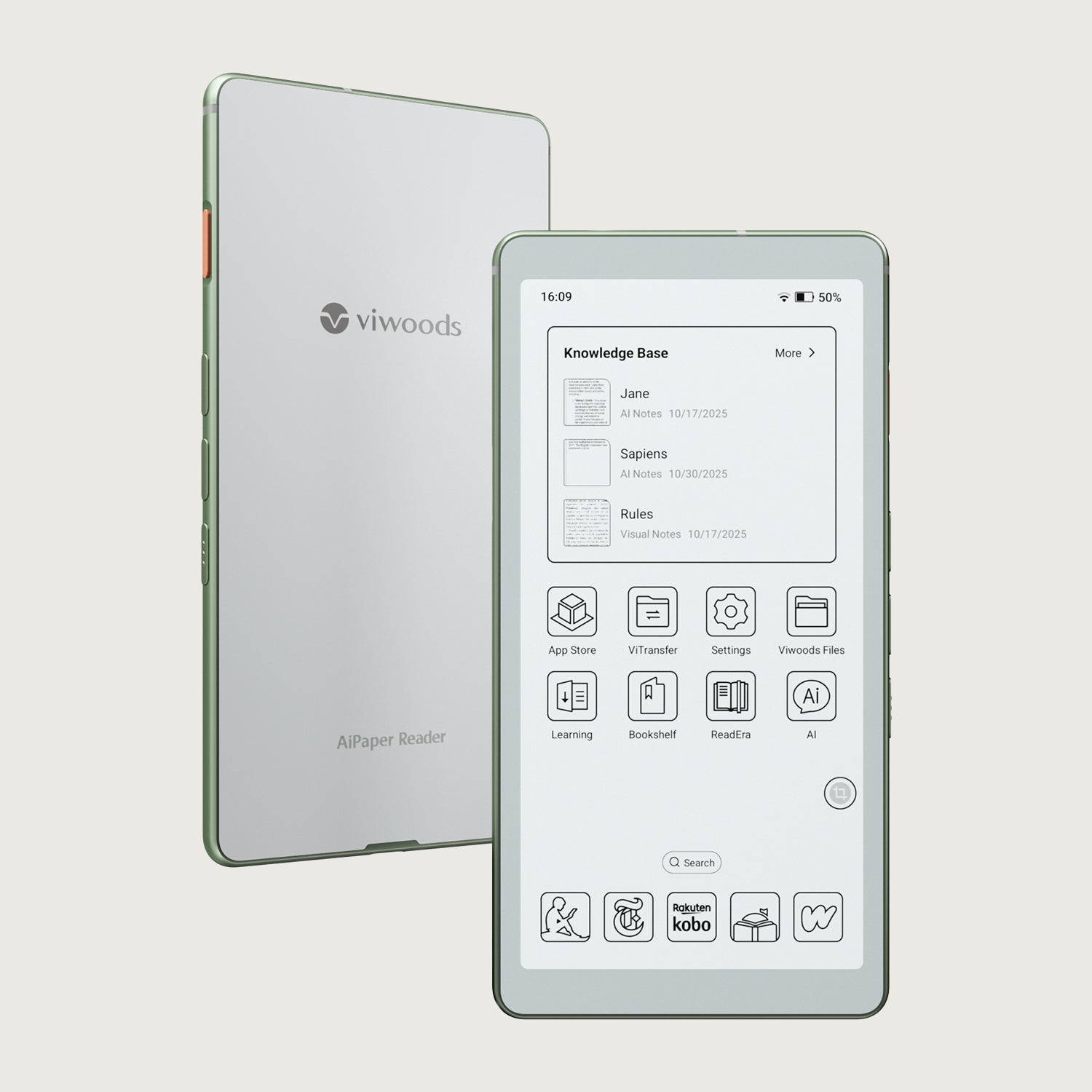
قارئ Viwoods AiPaper
$279.00