
A practical guide to preparing interview questions, capturing field evidence, separating observations from interpretation and managing research follow-up.
An E Ink tablet can be a strong interview tool when the work depends on a prepared guide, handwritten evidence, quick visual marks and a reliable review immediately after the session.
The real test is not whether the device can replace a paper notebook. It is whether an E Ink tablet for research interviews can keep questions, direct quotes, observations, interpretations and open follow-up connected without drawing attention away from the person in front of the researcher.
This guide follows the work as it actually develops: decide what evidence must survive, prepare a light interview structure, capture selectively, review while context is fresh and move only verified material into the research repository. The tablet supports that path; it does not replace consent, an approved recording process, analysis or research governance.
Before the interview
Build the Guide Around the Evidence You Need
A blank notebook can support a thoughtful conversation, but it gives the researcher few clues about what must remain usable afterward. One interview page may need to support thematic analysis, a quotation check, a handoff to another researcher and a later clarification. If those outputs were never defined, even detailed notes can become difficult to interpret.
Start with the evidence that must survive the session. A product discovery interview may need the steps in a current workflow, the language used to describe a frustration and the conditions that trigger a workaround. Field research may depend more on visible behavior, interruptions and the setting. Policy or compliance research may need document names, responsibility boundaries and points that could not be confirmed in the room.
Useful decision
Choose the page structure from the evidence needed after the interview—not from the number of note features available before it.
A complete working record may include a session code, interview date, research round, guide version, question status, selected quotations, paraphrased answers, observed behavior, early interpretations and unresolved questions. These elements should not look identical on the page. Consent information and direct identifiers should also remain outside the main research note unless the approved protocol explicitly requires otherwise.
The destination matters as much as the page. Some projects need a reviewed note file and a short session summary. Others also require an evidence index, follow-up register or link into a qualitative analysis system. Map that route before comparing devices so the test reflects real work rather than a polished demonstration.
Use short question IDs without turning the guide into a script
Stable question IDs keep a natural conversation connected to the research plan. A note marked Q3 still belongs to the third research question even when the participant reaches it early. Q1, Q1a and Q1b may be enough for a main question and two planned probes. Short marks such as EP for an emerging probe, CL for clarification and FU for follow-up are easier to use than long database-style codes while someone is speaking.
Leave more blank space than seems necessary. Real answers rarely fit a neat box. A generous writing area gives room for arrows, later clarification and a short quotation, while a narrow margin can carry question status. The guide remains a quiet map instead of becoming a checklist the participant can feel.

During the interview
Capture Evidence Without Losing the Conversation
The room has its own pace. Someone pauses before answering, reaches for an old form or opens three files to find the current version. Those moments may explain more than another paragraph of transcript-style notes. A researcher focused on recording every sentence can miss the behavior that gives the answer context.
Capture evidence anchors instead: the phrase that reveals how the issue is understood, the steps in a process, the condition that changes a decision or the action that can be directly observed. “Approval is slow” is weak. “Waits for two approvals, cannot see status, checks by message” preserves a sequence that can be examined later.
Let the guide move with the conversation
A response to Q2 may answer part of Q5. Mark “also Q5” beside the note instead of asking the same question again. When a new topic appears, give it a temporary code such as NEW-A. The post-interview review can decide whether it becomes a theme or remains specific to one session.
Write less during the most revealing moments
Some answers need eye contact and patience. A star beside “Q4—recovery example” can hold the place until the next natural pause. Expand it while the detail is still fresh, and mark any reconstruction that depends on memory. The page does not need to look polished; it needs to remain understandable when the session is over.
This is where an interview note tablet earns its place. It should open to the prepared page quickly, provide enough room for handwriting and simple diagrams, and keep the guide visible without visual noise. If page management repeatedly interrupts listening, the setup is not working even if the finished notes look tidy.

Protect the evidence trail
Keep Quotes, Observations, Interpretation and Follow-Up Distinct
A vivid sentence can gradually become “what was said” even when it began as a summary. An observed action can also turn into an assumed motive. A short evidence marker helps prevent that drift without slowing the interview.
The following codes are one workable example, not a universal research standard. A team can use different labels as long as everyone can tell which notes are direct evidence and which are later interpretation.
DQ — Direct quote: “I keep another sheet because I cannot see what changed.”
P — Paraphrase: Uses a separate sheet to track unresolved requests.
O — Observation: Opens three files before locating the current request.
I — Interpretation: Poor status visibility may be driving duplicate tracking.
Quotation marks should be reserved for wording captured accurately. A paraphrase condenses the stated meaning. An observation records what was directly seen or heard without assigning a motive. Interpretation connects the evidence to a possible explanation and should remain visibly provisional until other evidence supports it.
This separation matters across sessions. One participant may report duplicate tracking, while another shows it in practice. Those pieces of evidence are related but not identical. Keeping their origin visible makes the later finding easier to review and challenge.
Do not bury an unanswered question halfway down the page
An unanswered question may reveal missing access, unclear ownership or a process no single person can describe. A short status beside each question—such as A for answered, PA for partially answered, NA for not answered and FU for follow-up—keeps the gap visible. The status labels are examples; the important point is consistency.
State what evidence would close the gap. “Ask more about approvals” is vague. “Confirm the number and order of approval stages for urgent requests” can be resolved.
Follow-up example
FU-R2-P07-Q3
Evidence gap: approval order unclear
Needed to close: ordered stages and responsible roles
Status: open
Research follow-up is different from a meeting action item. Its purpose is to close an evidence gap, test an interpretation or locate a source. “Confirm whether the second spreadsheet is used across the team” is research follow-up. “Replace the spreadsheet” is a recommendation the evidence may not yet support.
When later evidence conflicts, reopen the question visibly instead of silently rewriting the note. A status such as “A → REOPEN” preserves how the understanding changed and helps explain why the final finding developed as it did.
While context is still fresh
Review the Session and Keep the Source Traceable
The moments immediately after an interview hold fragile detail. The meaning of an abbreviation is still obvious. The sequence behind a rough arrow still makes sense. A short review at this point can protect more value than a polished summary written days later.
Scan the guide from top to bottom. Check the session code, guide version, unclear question IDs, unmarked quotes and follow-up points without a status. Remove any unnecessary identifier that slipped into the working notes. Expand only shorthand that another authorized researcher would not understand.
- Complete a privacy and identity scan.
- Separate quotes, observations and interpretations.
- Create follow-up IDs for unresolved evidence gaps.
- Write a brief evidence-led session summary.
- Apply the approved filename and move the reviewed file through the approved route.
A stable filename can include the study code, research round, participant code, date, document type and version. For example, ORION_R2_P07_2026-08-29_InterviewNotes_v01 sorts cleanly without exposing a participant name.
The guide version belongs in the record too. If questions changed between rounds, a missing answer may reflect the older guide rather than poor interviewing. A review footer can show the review date, privacy scan, repository transfer and any open issue.
A complete example from prompt to finding
Consider a study of how internal requests move from submission to approval. The evidence plan calls for the real sequence, tools used, waiting points, exceptions and workarounds. The guide gives each area a question ID and reserves a margin for observations and follow-up.
During one interview, Q5 asks how status is checked. The researcher records: DQ—“I ask in chat because the system stays unchanged.” An observation notes that the participant opens chat history to find the last request. An interpretation suggests weak status visibility may drive channel switching, while FU-Q5 asks whether the two-day waiting threshold is personal or shared.
After the session, the interpretation remains a hypothesis. Follow-up confirms that two days is a personal threshold rather than a formal rule, and the resolution is added beside the original ID. The evidence still supports channel switching, but the timing cannot be generalized.
Traceable chain
Research objective → guide version → session code → question ID → evidence → interpretation → follow-up → resolution → finding
This chain is the difference between stored notes and reusable research. A repository can add themes and synthesis, but it should not erase the origin of the evidence. Question IDs and session codes allow a later reviewer to return to the source without guessing.
Before deployment
Confirm Privacy, Transfer and Access Separately
Research notes may contain sensitive opinions, operational detail or indirect identifiers. A comfortable writing experience does not answer where files may live, which services may process them or who may open them. Capture quality and research governance must be tested as separate decisions.
Keep consent records, identity keys and working research notes separate whenever the approved protocol allows it. Use the participant code in the main note file, and record only session context that helps interpretation: setting type, interview format, interruptions, materials reviewed and any circumstance that materially changed the conversation.
- Capture: Which fields are permitted, and which identifiers are prohibited?
- Storage: Where may working notes and reviewed records be stored?
- Transfer: Which route and file format are approved?
- Access: Who may view identity keys, raw notes, summaries and findings?
- Retention: When should temporary copies be removed?
- Voice and AI: Has any recording or external processing been separately approved and explained to the participant?
Pilot one representative interview from template preparation through repository retrieval. Include the privacy scan, approved transfer and handling of temporary copies. That exercise reveals more than a specification comparison because it tests the whole path where research data can be lost, duplicated or exposed.
Corrections also need a visible method. A clarification should preserve the original status, corrected information, source, date and effect on interpretation. Silent replacement weakens the trail that makes professional research reviewable.
Selection guidance
Choose the Device Around the Interview
The useful test uses a real guide, a realistic session length and the actual file route. Check whether the question map stays readable, whether notes can be written without constant page management and whether open items remain easy to scan afterward. A beautiful demo page does not show how the workspace behaves when an answer jumps between three topics.
Page space matters when the guide, live notes and a margin code must remain visible together. Portability matters more when interviews move between rooms, client sites or field locations. The better choice depends on which compromise protects attention and review quality in the real setting.
Choose Viwoods AiPaper when
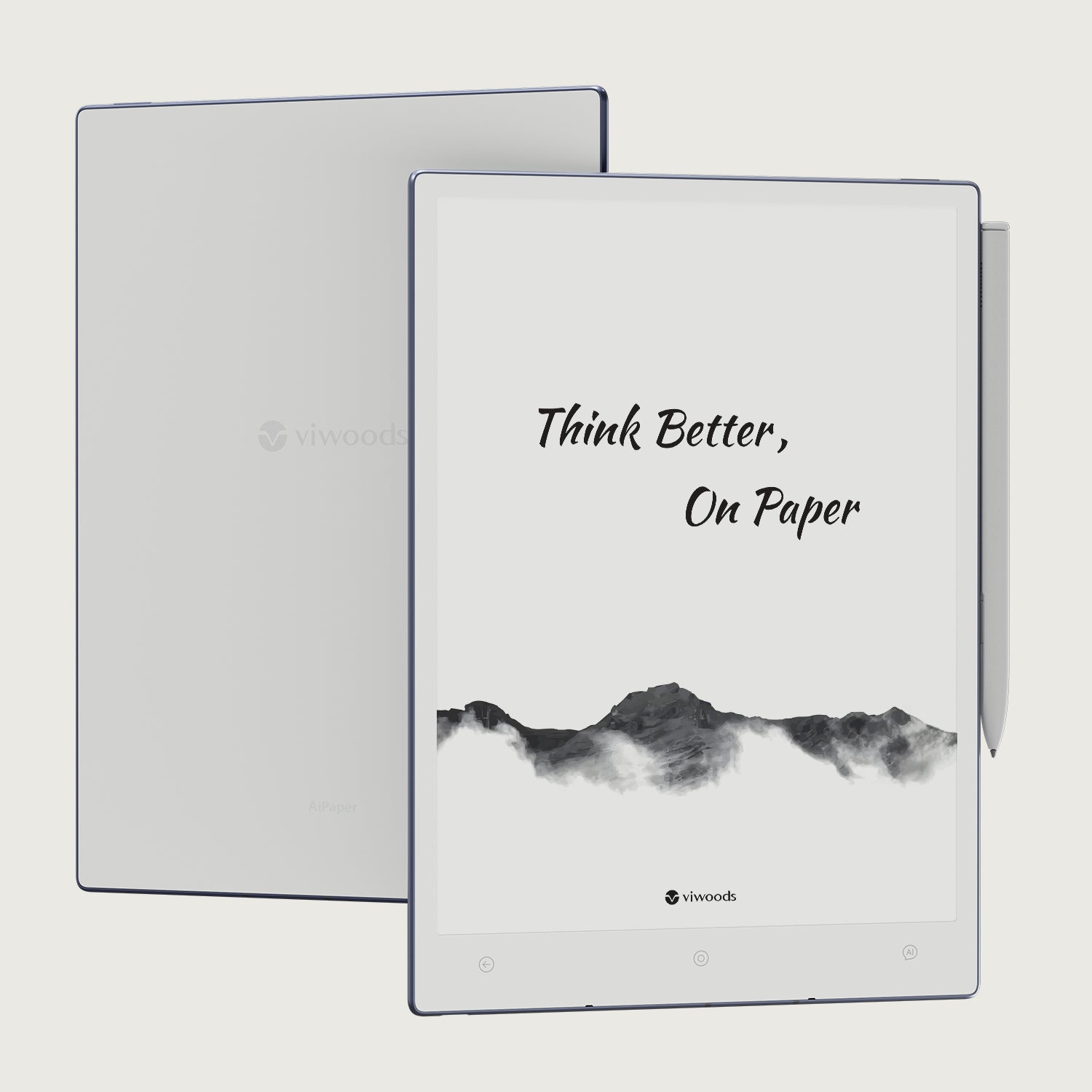
Long interviews, full-page guides, PDF source material, wide writing space and post-session review matter more than minimum carry size. Its current product page lists a 10.65-inch format, custom templates, note layers, handwriting conversion, tags and several file-transfer paths.
Compare AiPaper Mini when
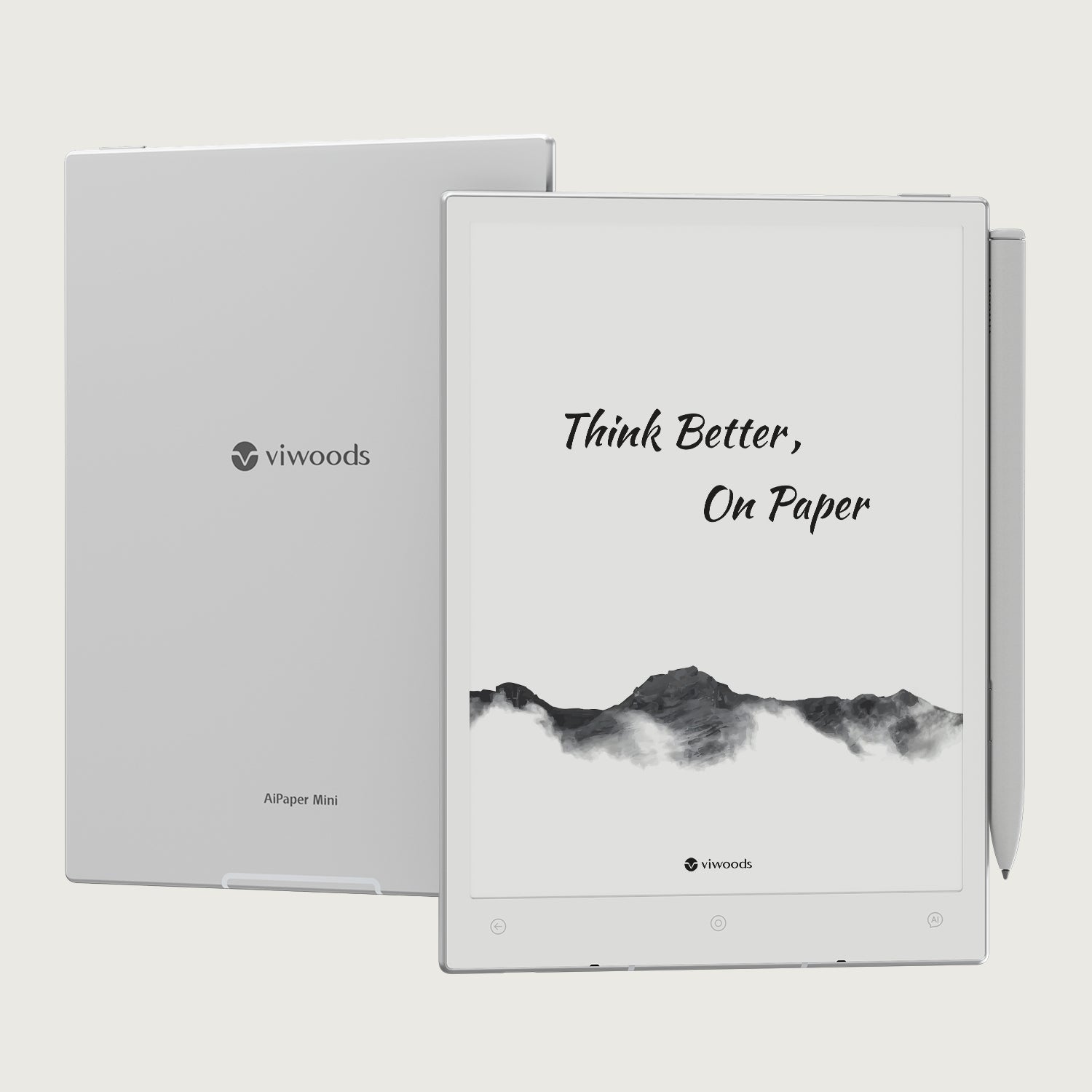
The researcher moves frequently, captures shorter notes or values an 8.2-inch portable format more than keeping a complex guide and wide note margin on one screen.
Use another approved tool alongside it when
The project requires consented audio, verbatim transcription, collaborative coding or controlled repository functions. The E Ink tablet can support capture and review without pretending to replace the entire research system.
Test the stylus and template as one workflow. Write a fast sequence, add a short quote, draw an arrow to an earlier answer and mark an open question. Return after a break and check whether the page still makes sense. Then import, review and export one representative file through the approved route.
For repeated templates, team processes and deployment support, Viwoods Business Solutions is the more relevant next step. Prepare the interview format, expected session length, storage rules, transfer route and team size before the conversation.

Continue reading
Related VIWOODS Guides
Handwritten Notes to Text on a Writing Tablet →
Use this when reviewed handwriting needs to become editable, searchable text.
Writing Tablet for Professionals: What to Check →
Compare handwriting, PDFs, privacy, export and team workflow fit.
E Ink Tablet Buying Guide →
Use the broader guide when screen, stylus, apps and everyday workflows still need comparison.
Common questions
E Ink Tablet Research Interview FAQ
How can an E Ink tablet support research interviews?
It can keep a prepared guide, handwriting space, evidence markers and post-session review in one focused workspace. The benefit comes from a repeatable structure and a clear file route, not from replacing paper without changing the workflow.
Should the interview guide and field notes be separate files?
They can share one working document if planned prompts and session evidence remain visually distinct. Separate files may suit complex studies but create more switching during the conversation. Test both arrangements with a realistic session before standardizing the template.
Can an E Ink tablet replace interview recording or transcription?
Not automatically. Handwritten notes, audio recording, transcription and repository storage serve different purposes. If the study requires audio or verbatim transcripts, use an approved process with the required consent and treat the tablet as the capture and review layer.
Is AiPaper or AiPaper Mini better for interview notes?
AiPaper is the stronger starting point when a full guide, margin codes, long handwriting and PDF review need more page space. AiPaper Mini is the more portable direction for shorter notes and mobile fieldwork. Test the same guide on the intended screen before deciding.
Test a real interview, not a demo page
Make the guide, evidence and follow-up traceable
Prepare one representative guide or PDF, the expected session length, the interview setting, the approved storage and transfer route, and the number of researchers involved. Use those details to test AiPaper or plan a team workflow before deployment.
Guides 紙のような書き心地のタブレット
How to Turn Meeting Notes into Action Items with AI
Paper Tablet for Meetings: Notes to Action Items
E Ink Tablet for Training and Onboarding: Manuals, Notes and Knowledge Capture
E Ink Tablet for Project Handoffs: Review Notes, Open Issues and Next Steps
E Ink Tablet for Executive Briefings: Read, Mark, Decide and Follow Up
E Ink Tablet Total Cost of Ownership for Business Teams
Fabric vs Leather Tablet Case: Which Material Fits Daily Carry?
E Ink Tablet for Research Interviews: Interview Guides, Field Notes and Follow-Up
How to Carry a Paper Tablet and Stylus Together Without Damaging the Screen
How to Store an EMR Stylus Safely: Protect the Nib, Magnet and Tablet
Viwoods AiPaper
$549.00
Viwoods AiPaper Mini
$429.00
Viwoods AiPaper Reader カラー
$289.00
Viwoods AiPaper Reader
$279.00